
Polterguys Update and Commissions OPEN
- At August 24, 2011
- By Laur
- In updates
 0
0
Sample Commission (See info below)
Polterguys rewrites are almost done
Polterguys is moving along at its glacial pace. Every time I feel like I’m not moving fast enough, I try to remember that this is my first time writing a major project like this. If a 34-page oneshot like Final Track was rewritten no less than three times, I need to cut myself some slack and give this the time it deserves. I’ve honestly lost track which draft I’m in at now. But I am taking heart that the people Nate and I have shown these to seem to think certain elements are improving.
I think it’s easy for beginning artists to see everyone else busting out comic pages week after week and forget that behind each fantastic update is a lot of preparation done beforehand. After all, a wonderful comic is 50% story and stories (the best of them anyway) don’t come to storytellers fully-formed and ready-to-go. I can only think of PIXAR and the amount of time they dedicate to developing their stories (4-6 years compared to the 2 years it takes them to produce the actual film.) Patience is the name of the game!
I try to stay positive despite the ever-present worry about not being quick enough for the rest of the world. But I do have my personal deadlines and I’m giving myself enough breathing room to do things thoroughly the first time through.
$20 Color Commissions are OPEN!
I’m opening up $20 quick color commissions again. Samples are above below. If you’re interested you can comment here, or drop me a line at laurchan[at]yahoo.com.

Sample Commission 2
State of Self-publishing: Manga
- At August 19, 2011
- By Laur
- In updates
- 2
This video gives me so much hope! I can’t wait to be sharing my own work at TCAF or at any other comic convention again for that matter. I’ve attended Anime Expo and a few other conventions before. For the most part, my experience has always been positive. I make up the costs of attending through commissions and it’s wonderful to meet other artists and people who like my work face to face. But I’ve always felt woefully unprepared in more ways than one.
While I do enjoy creating fan art, I’d always feel like I didn’t quite belong as I exhibited my work next to other artists. I had an ache in my heart that couldn’t be satisfied by my provision of prints, commissions and bookmarks of other people’s characters. I felt like I was doing things backwards. I have nothing against my fellow Artist Alley attendees some of whom I have great fondness and admiration for, but what I longed for more than anything else was to have an original body of work on the table: A story to share. I felt incomplete without it. I wanted something to prop up with the full force of my passion and it had to be something I created.
Ofcourse, I really have no idea how I’ll be around this time next year. Signing up for all these conventions at this point feels premature somehow. Perhaps, I’ll wait another year before debut-ing my work in Canada!
—
Links I’m sharing this week:
Jason Brubaker’s post Growing Your Audience is like Growing a Tree is a fantastic must-read for aspiring comic creators. Just like improving your craft, building an audience that appreciates it also takes time and effort. The most important thing to take away is PERSIST!
Meanwhile, Jake Parker’s story of three travelers as they traverse The Known World of Visual Storytelling is insightful as it is playful.
5 Helpful Links for Creating Comic Panels
- At August 17, 2011
- By Laur
- In tips
- 0
Wally Woods' 22 Panels that Work (via JoelJohnson.com)
I was part of a Deviantart comic group that opened up a suggestion box to Ask the Mods when I noticed artists were asking for tips on how to make manga panels. Eager to help, I immediately wanted to reply with something but found it was difficult to boil down everything I felt needed to be included. Reflecting on my own learning process, I wasn’t even sure I knew what made my own panels ‘good’ or ‘good enough.’ So like everything you’ll probably read on this blog, these posts are somewhat selfish in nature, as they also serve to remind me of the important stuff that go into creating comics.
Elements of Good Composition
If you think about what creating comic panels really are, it’s the art of arranging boxes on a page. Manga is particularly known for its diverse and bombastic arrangements. But first and foremost, nothing beats knowing the most basic of design elements: composition. Fortunately, the Temple of Seven Golden Camels (a fantastic resource blog for story board and layout artists) has two short reference links on this: Composition 101 and Composition 102. You just can’t go wrong brushing up on foundational stuff.
Panelling and Pacing
Lilrivkah’s post regarding the pages of her OEL manga Steady Beat is quite informative as she analyzes how creating her panels informs the pacing of her story. On this note, I think it’s really important for manga/comic artists to actually “study” how the comics they read and appreciate actually work for that particular genre. For instance, the elements of a shojo manga like Fruits Basket won’t necessarily work for a seinen comic like Naoki Urasawa’s Monster. The two are very different stories and therefore, employ different kinds of pacing, layout and panels. I find that I go back and forth between more open layouts and strict grid-like formations because I want to make the panel arrangements serve the purpose of my scenes.
Disney Comic Artist’s Kit
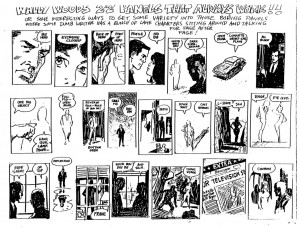
Carson Van Osten’s helpful handout illustrates some recurring problems with staging and perspective within panels and also shows how to resolve them. I’m personally ecstatic to have come across this because even if superficially, it has nothing to do with manga, it has everything to do with depicting characters in believable environments – a most difficult task for beginning comic artists everywhere. Wally Wood’s 22 Panels That Work handout (pictured above) is a nice little reminder of the different ways you can stage panels in Western comics and also helps fuel more interesting compositions.
Feedback from a Manga Editor
SASAKI Hisashi (former Editor in Chief of Weekly SHONEN JUMP – where Naruto, Bleach and One Piece are all serialized) recently gave some insightful feedback to young American mangaka at Comic-con last month. He also shares a lot of beginning artist problems which are worth keeping in mind. It’s no question getting feedback is an important step in growing artists’ process and whether it’s from someone as high up the ladder as Hisashi-san or your own best friend, I think you can always learn a thing or two from the people who read your work.
Manga-Apps Template Page Layouts
Finally, for manga artists totally in the dark about composing their own panels, here’s a Deviantart resource group filled with Template Page Layouts. The risk of using cookie-cutter boxes is ofcourse you may not learn the right way to do things from the ground up but learning is very personal journey for everyone. What works for me may not be the same for you and I’ve always felt you still learn something just by the sheer act of DOING IT. So if you just want to make comics, go MAKE COMICS!
What are some other tips, posts, and sites about comic panels you recommend? Feel free to sound off below!